


Op-Ed: If Jesus Came Back, Would He Even Recognize Christianity?

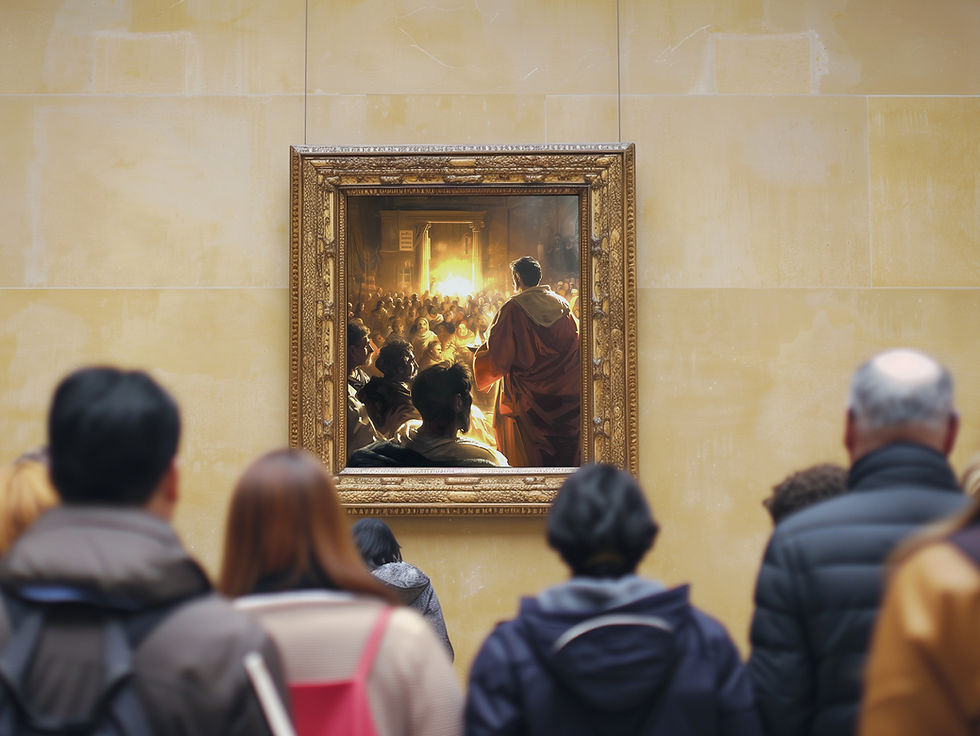
Many people today call themselves Christians and proudly claim to be followers of Jesus Christ, but if we take a look at their lives we have to ask: Are they really living by the teachings of Jesus, or have they strayed far from the message he gave? The words of Christ are clear, yet most of what passes for Christianity today looks nothing like what he taught.
Let’s talk about the Scriptures—the words of Jesus and the commands he gave—and try to return to his original message to understand what it truly means to follow Christ. We must remember that Jesus made a promise. He appointed a successor, saying to Peter, “On this rock I will build my church.” So what exactly was that church, and what mission did Jesus entrust Peter to build and carry forward?
One of the best ways to approach this is to examine Jesus’s stance on money and wealth because this issue remains central to life today. Our systems are built around the need for money to survive, yet Jesus said in Matthew 6:24:
“No one can serve two masters. Either you will hate the one and love the other, or you will be devoted to one and despise the other. You cannot serve both God and money.” (Bible, Book of Matthew, Chapter 6, Verse 24)
Based on this verse, every believer must choose whom they will truly serve. It is a heavy truth for Christians, because the world is structured around the pursuit of wealth. Yet Jesus taught not to chase money and possessions, but to seek the Kingdom first, trusting God to provide.
“Do not worry about what you will eat or what you will wear. The pagans run after these things, and your Father in heaven knows that you need them. But seek first the Kingdom of Heaven, and all these things will be added to you.” (Bible, Book of Matthew, Chapter 6, Verses 31-33)
Even in the time of Jesus and Peter, under Roman occupation, currency, taxes, and financial systems defined everyday life. Yet the disciples made a deliberate choice to live by a different economy—one not built on Rome’s wealth and power, but on devotion to the Kingdom of God.
Let’s look at Peter and what he actually did, since he is the one Jesus promised would build the Church of God. When we examine the disciples, led by Simon Peter—Jesus’s designated successor—we see a living prototype of what he required from his followers and the principles he instilled in them. Together, they established a miniature Kingdom of God, forming a congregation of believers who shared their resources and cared for one another. This is beautifully described in the Book of Acts:
“The full number of those who believed were of one heart and soul, and no one claimed that any of their possessions was their own, but they shared everything in common… There was not a needy person among them, for those who owned lands or houses sold them, brought the proceeds to the apostles’ feet, and it was distributed according to need. Thus Joseph, called Barnabas (which means son of encouragement), a Levite from Cyprus, sold a field he owned, brought the money, and laid it at the apostles’ feet.” (Bible, Book of Acts, Chapter 4, Verses 32, 34-37)
There was no sense of “This is mine, this is yours.” Everyone contributed what they had, and everything was distributed according to need. Those with less were provided for, and those with more helped sustain the community. They had families, daily expenses and obligations under Roman rule, including taxes, yet they maintained their own little Church. This was a living prototype of the Kingdom of Heaven.
The disciples were told to seek the Kingdom, not money—to set aside personal wealth and focus on unity, faith, and shared purpose. People came together from different backgrounds—some wealthy, like Barnabas, who sold a field and contributed the proceeds, and others with little to give—but all participated for the sake of God, and all received according to their needs.
It is a beautiful, selfless, and righteous way of living, recorded in such detail in the book of Acts that we can understand what it truly means to follow Christ. To grasp this, we must look at those who were with Jesus and the community he entrusted to Simon Peter, led by the Holy Spirit. It was this Spirit that guided their actions, unified them, and ensured that their focus remained on God rather than wealth.
Now we see this little Kingdom of Heaven on Earth, and we begin to understand how their church and community were structured. This example helps clarify Jesus’s words about how difficult it is for a rich man to enter the Kingdom of Heaven. Who is “rich” in that context? In this community, everyone had to give up personal wealth and share. Everything was distributed according to need, creating true equality.
As Jesus said, it is easier for a camel to pass through the eye of a needle than for a rich man to enter the Kingdom, emphasizing that attachment to wealth is a huge test. We see this in the story of the rich man who was told to sell everything and give it to the poor. He could not do it and went away saddened. To truly enter the Kingdom of Heaven, one must surrender everything to God and trust Him to provide. The poor—the people who came to Jesus—were the recipients, supported by the community.
While walking with his disciples, Jesus was teaching them this way of life by example. He was guiding Simon Peter and the others on how to establish and perfect this Kingdom of Heaven. That is why he said, “Sell everything and follow me.”
We also see a sobering warning in the Book of Acts. A married couple joined the community but attempted to deceive Peter by withholding part of their wealth. They tried to remain rich while entering the Kingdom. Acts 5:1–5 tells the story of Ananias and Sapphira, showing that entry into this Kingdom requires full honesty, total surrender, and complete devotion.
“But a man named Ananias, with his wife Sapphira’s knowledge, sold a piece of property. Yet he kept back part of the proceeds for himself and brought only a portion of the money, laying it at the apostles’ feet. Then Peter said, ‘Ananias, why has Satan filled your heart to lie to the Holy Spirit and to keep back part of the proceeds for yourself? While the land remained unsold, was it not yours? And after it was sold, was it not under your control? Why have you planned this deed in your heart? You have not lied to men but to God.’ When Ananias heard this, he fell down and died, and great fear seized all who heard about it.” (Bible, Book of Acts, Chapter 5, Verses 1-5)

Simon Peter knew what was in his heart. Ananias tried to lie to the successor of Jesus, Simon Peter, who had the Holy Spirit. And this was a grave sin. He tried to withhold from God. He tried to lie to God. And he tried to not give what was required, which is that you need to give everything to God in order to enter into the Kingdom of Heaven. He tried to enter the Kingdom of Heaven while being rich, and that didn’t work. He died. It was just as Jesus said—impossible. So you can’t lie to the Holy Spirit. You can’t enter the Kingdom of Heaven as a rich man. And if you do that, there are consequences. And it says that right after this incident, people were afraid to join because they weren’t able to lie and trick the Holy Spirit. Then the story goes on:
“After an interval of about three hours, his wife came in, not knowing what had happened. And Peter said to her, ‘Tell me whether you sold the land for so much.’ And she said, ‘Yes, for so much.’ But Peter said to her, ‘How is it that you have agreed together to test the Spirit of the Lord? Behold, the feet of those who have buried your husband are at the door, and they will carry you out.’ Immediately she fell down at his feet and breathed her last. When the young men came in, they found her dead and they carried her out and buried her beside her husband. And great fear came upon the whole church and upon all who heard these things.” (Bible, Book of Acts, Chapter 5, Verses 7-10)
There’s no such thing as “I’m better than anybody else” in the Kingdom of Heaven. Ananias tried to bring injustice and sin into the Church of God, and he paid a grave price for it. These are lessons for us. This is the Church of God—the Church Jesus wanted to establish upon his rock. Anyone who is not living like this and practicing these principles is not truly a follower of Jesus. And it is a challenge to anyone to point to a group of Christians today who are actually living up to this standard. Modern Christian communities do not operate this way. People live their own lives, disconnected from building a Kingdom of God or a miniature Divine Just State—except for the Ahmadi Religion of Peace and Light.
People are not taking care of one another. They are not treating others as themselves or loving their brothers and sisters as they should. They are not living up to the standards Jesus set, and this includes financial responsibility within the community. It should not be a controversial topic, however things have strayed so far from God’s design that it has become almost taboo to discuss money in a religious setting. Yet, it is clearly stated in the Bible that Christians claim to follow. Many excuse themselves, saying that these standards were for another time—but Jesus never said that. These were the standards he held his disciples to.

If the Bible is truly the living Word of God, then these instructions apply to us today. Jesus’s mission was to establish the Kingdom of God, fulfilling the will of the Father. He told his disciples that not everyone who says, “Lord, Lord,” will enter the Kingdom of Heaven—only those who do the will of the Father. That will is to sell everything, to live as one with your brothers and sisters, regardless of who they are or where they come from. This is difficult for selfish or self-centered people who care only about money and status. That is why Jesus said, “He who would be first must be last” (Matthew 20:16).
If you actually look at the words of Jesus, it becomes clear that he was trying to build the Kingdom of Heaven on Earth. The only prayer he taught the disciples says plainly: “Your kingdom come, and your will be done on earth as it is in heaven” (Matthew 6:10).
Jesus was establishing a kingdom on Earth under God’s rule, because God rules in Heaven. How can anyone enter Heaven if they do not obey God here and now? That is the test for humanity: We must want God to rule us today in order to enter the place where He rules eternally.
Jesus illustrated this with the parable of the mustard seed. He said the Kingdom of Heaven is like a mustard seed, which a man plants in his field. Though it is the smallest of seeds, when it grows, it becomes the largest of garden plants and a tree where the birds come and rest in its branches. The seed of the Kingdom is the King himself. When the Pharisees asked Jesus where this Kingdom was and why they could not see it, he said, “The Kingdom is already in your midst” (Luke 17:21).
Jesus was clearly speaking about a physical Kingdom of God on Earth, not a kingdom that exists only in people’s hearts. The simplest proof of this is that the Jewish people were waiting for the Messiah to establish a tangible, physical kingdom. There are no prophecies describing a kingdom that exists solely in hearts—it is a misinterpretation that arose after Jesus’s lifetime. Going back to his words, it is very clear: he was talking about a kingdom here on Earth.
Revelation 21:2–4 states,
“And I saw the holy city, new Jerusalem, coming down out of heaven from God, prepared as a bride adorned for her husband. And I heard a loud voice from the throne saying, “Behold, the dwelling place of God is with man. He will dwell with them, and they will be his people, and God himself will be with them as their God. He will wipe away every tear from their eyes, and death shall be no more, neither shall there be mourning, nor crying, nor pain anymore, for the former things have passed away.” (Bible, Book of Revelation, Chapter 21, Verses 2-4)
This path is not easy—just as in the time of Jesus, it was not easy. He had only twelve disciples, and one of them betrayed him for money, choosing wealth over God. To follow this path, you have to put yourself and your wealth aside completely, and put others first. In the Kingdom of God, there is no place for someone who is rich while others are starving or lacking basic needs like food, water, and clothing.
When people approached Jesus wanting to join him, he gave them a choice. He said they could follow him, sell their belongings, and dedicate themselves fully to God. He made it clear that the proper course for perfection was to give everything to God and follow him. But ultimately, it was up to each person whether they would take that leap of faith—whether they would pledge their allegiance to God and seek only Him and His Kingdom.
We want to put others first. We want God. We want Jesus. We want to do what God commands us to do. That is the essence of our message: Humanity first. For us, religion is about morals, manners, love, and the good treatment of others. That is what Religion truly is. Jesus said that two commandments encompass all the Law and the prophets: Love the Lord your God with all your heart, and love your neighbor as yourself. That is the entirety of Religion. Jesus was calling people to the Kingdom of God, and we are carrying the same message. We are also calling to the Kingdom of God.
In the end, following Jesus is not about simply believing that he existed or that he died for your sins so you can continue living in the world and its systems. It is about surrendering yourself completely to God, putting others first, and building a community rooted in love, justice, and unity. The early Church, led by Peter and guided by the Holy Spirit, showed us what this looks like: A Kingdom of Heaven on Earth, where needs are met, wealth is shared, and every person is valued equally. Today, this same call remains. To be a true follower of Christ is to seek God above all else, to live selflessly, and to strive for the Kingdom of God here and now. This is the path Jesus laid before us—a path of sacrifice, devotion, and unwavering commitment to the will of God. And it is a path open to anyone willing to take the leap of faith and truly follow him.


Amazing article and gives much to contemplate upon. You cannot serve both the Kingdom of God and the kingdom of the devil. Jesus clearly states that you cannot serve two masters. God bless you Sister ♥️
Very incredible article sister Saiha, Alhamdulillah, it is clear today that the Christian today have not practice this practices anymore but yet their scholar preach the opposite of it like saying stuff that "My Church can make you rich" implying that God will give you a lot of money and etc. The Scholars themselves live extravagantly and hoarded a lot of wealth for themselves through preaching the Gospel and earn a living from it like a celebrity pastors and etc.
Good article sister Saiha