


The Story of Ahmad Bukhari – The Search for Imam Al-Mahdi and the Price of Belief
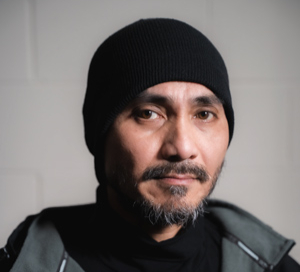

Around 2015 to 2016, Ahmad Bukhari from Malaysia entered a phase in his life to seek out and find the truth. As a Muslim who yearned for justice in the end times, he began to search for the eschatological figure, the Mahdi, with all his soul and conviction. This search, which was not strictly based on evidence from the Qur’an and the Hadiths of Prophet Mohammed, led him to a point where he met and followed a Malaysian man whom he believed at that time to be Imam Al-Mahdi because at that time he had never met anyone who was more knowledgeable than him.
Based on this belief, Ahmad Bukhari began to emerge as a loud “voice” on Facebook. Through the social media platform, he spread the views he believed to be the truth. Among the issues he highlighted was the claim that Imam Al-Mahdi had already appeared, the argument that prayers are only required three times a day as stated in the Qur’an, and accusing the Sultan of Johor (Yang di-Pertuan Agong, the head of all sultans in Malaysia) of being an enemy of Imam Al-Mahdi.
One of his most vocal arguments related to the Rami Al-Jamarat (stoning of the Devil during pilgrimage to Mecca), he claimed that the modern structure had become an "innovation" and resembled an idol because its size had grown significantly larger than its original form. According to him, the change had strayed from the original form used during the Prophet's time, making the practice of throwing stones no longer valid.
Older structure of the place of stoning Modern structure of the place of stoning
He also questioned the rationale for the ritual, arguing that it was unreasonable for God to want people to gather in such a narrow area at the risk of causing death from stampedes and trampling, especially since Islam would be embraced by billions of people in the end times.
Siege and Handcuffs
One day in 2016, Ahmad Bukhari shared a post from the Facebook page of the Malaysian man who claimed to be the Mahdi. The post was a picture of a gun with the US Embassy account tagged. This vague post quickly went viral. His worried family immediately filed a police report.
While he was in his room at his mother's house, he noticed the presence of masked special police outside the window and realized the house was surrounded. His mother then knocked on his bedroom door. When the door opened, he saw several members of the Special Branch (SB) standing behind his mother, most of whom were wearing face masks and were armed with guns.

He received absolutely no defense or support from any of his other family members who were in the house at the time. Ahmad Bukhari was immediately taken to the living room and handcuffed in front of his family, who remained silent and turned a blind eye to the incident.
His car was searched, photos were taken, his smartphone was confiscated, and he was led into a van while blindfolded. Inside the van, there were SB members who began questioning the nature of his crime themselves. Ahmad Bukhari realized that they were only carrying out orders from their superiors. After about 30 minutes, the van stopped at a parking lot of an apartment building. His blindfold was removed, and he came face-to-face with Ayob Khan Mydin Pitchay, who is now the Deputy Inspector-General of Police.

The officer was aware of Ahmad Bukhari's background, which was once associated with Jemaah Islamiyah (JI). He was just a young teenager during his involvement with this militia group at the time, through the influence of his biological father. Shortly after seeing the corruption of the group, he repented and distanced himself from that group. From that point, Ahmad Bukhari decided to think for himself as to where the truth lies. After the encounter, Ahmad Bukhari was taken to the Bukit Aman Police Headquarters along with several other detainees associated with ISIS.

SOSMA Detainees and the “Crazy” Label
Ahmad Bukhari was detained under the Security Offences (Special Measures) Act 2012 (SOSMA). This Act was introduced in June 2012 to replace the Internal Security Act, which previously allowed for detention without trial. SOSMA empowers authorities to detain individuals suspected of involvement in terrorist activities or threats to national security for investigation and prevention purposes. Under this act, a person can be detained and closely monitored for the duration of the investigation.
He was placed in a secret location, in a high-security cell, and kept in complete isolation—alone with no one to talk to. Every time he was taken out for questioning, Ahmad Bukhari's eyes were covered, and his hands were tightly handcuffed. On the first day, an officer sarcastically said, "You decide if this room is red or white."
The individual he believed to be Imam Al-Mahdi was also arrested. Police later discovered that the individual was a registered patient with Bipolar Disorder, and that fact was used to mock Ahmad Bukhari by telling him that only “madmen follow madmen.” During approximately one month of investigation, he was repeatedly questioned and even ordered to sing the national anthem, Negaraku, while saluting. Ultimately, the police concluded that Ahmad Bukhari was not a physical threat, but rather a person with deep convictions about an individual who was mentally ill. However, according to the investigating officer, his actions had caused the United States Embassy to raise its security alert to Level 4.
Sungai Buloh Prison and the Fall of Confidence
Two weeks after his release from SOSMA, Ahmad Bukhari was arrested by the Selangor Islamic Religious Department (JAIS). It is believed the police had handed his case over to religious authorities, who classified it as a Sharia criminal case. He was forced to spend the night in a lockup with detainees from khalwat (close proximity) cases, highlighting the department's specific focus. The next day, he was taken to the Sharia Court and charged with three counts related to spreading heretical teachings and declaring an individual as the Mahdi—acts that are considered Sharia criminal offenses throughout Malaysia.
Due to the Selangor Islamic Religious Department's delay in preparing the detailed indictment, the judge offered Ahmad Bukhari bail of RM7,000 while waiting for the documents to be finalized and the full trial to proceed. However, he was unable to afford the amount, and no family members or acquaintances were willing to act as his guarantor.
As a result, he was sent to Sungai Buloh Prison, a facility that once housed Anwar Ibrahim (the current Prime Minister of Malaysia) while he was imprisoned for sodomy. There, for the first time in his life, his personal dignity was violated when he was forced to strip completely naked for an examination in front of several guards. He was placed with prisoners facing serious criminal charges in a dirty and foul-smelling cell. The other prisoners were surprised by him because he spent so much of his time reading.
The condition of the toilets and showers was also shocking: there were no doors, only low brick partitions that allowed prisoners to see each other's private parts. The toilets were often clogged, and sometimes there was no water. This was highly ironic for a country that claims to have a majority Muslim population, yet fails to provide basic privacy and hygiene in its prisons. However, he witnessed a poignant situation—a group of Pakistani prisoners working together to surround the toilet area when one of them needed to use it, ensuring that some level of privacy was maintained.
Despite being in prison for more than three months, the prosecution papers remained incomplete. Finally, after the Selangor Islamic Religious Department persuaded his father to pay the bail, he was released after three months and twenty days without a conviction. Upon his release, he contacted the individual to whom he had pledged allegiance as the Mahdi. Unfortunately, the individual had resigned from his “Imam Al-Mahdi” post, denying all the sacrifices and efforts that Ahmad Bukhari had made.
Baitul Iman: A Restoration Full of Conflict
A few weeks later, Ahmad Bukhari was summoned back to court, convicted, and sent to the Baitul Iman Faith Purification Center in Ulu Yam, Selangor, for six months. During that time, he was quarantined twice—alone in a cell—after getting into arguments with the warden and other prisoners who accused him of being a deviant. At the center, he witnessed various forms of cruelty, including an instance where a warden set fire to another prisoner. His report of the incident was only used as a warning, and no strict action was taken against the warden.
Because Ahmad Bukhari was considered "problematic" by his superiors, he was taught individually by special officers at his cell door, as regular classes were considered unsuitable for him. He had to undergo several written tests; every time they went through the answers he had written down, he was met with profound disagreements among the officers themselves regarding the correct answers and several other issues.
For instance, regarding whether professions like singing or acting are considered halal, one instructor refused to award him marks. This occurred despite other officers disagreeing with the decision and labeling the officer's actions as extreme. On another occasion, while he was discussing the hadith concerning camel urine found in the Sahih books, his arguments were flatly rejected. Rather than engaging with his points, the dissenters met him with accusations, claiming he merely desired to be a "hero who saved the world."
Physical Torture: Caning Treatment
During his time at Baitul Iman, Ahmad Bukhari was sent to an alternative treatment center called Al-Manarah on the grounds that he was “possessed by a jinn.” There, he underwent four caning sessions, each lasting thirty minutes, where his body was repeatedly beaten until it was bruised blue in various areas, including sensitive parts such as the chest, buttocks, and cheeks. When he screamed in pain, they interpreted the sound as the voice of the jinn and intensified the beating. Eventually, he had to learn to remain silent to ensure his own safety.

An ironic incident occurred one Friday: after returning from a caning session, the escort officers laughed among themselves because they had missed Friday prayers while accompanying him. They accused Ahmad Bukhari of being misguided, yet they themselves had failed to perform their religious obligations.
Dead Dialogue and Taqiyyah (Precautionary Dissimulation)
At the Baitul Iman Aqidah Purification Center, Ahmad Bukhari often asked questions and engaged in dialogue with the teaching staff, but his questions were never met with logical arguments. Instead, he was threatened with an extension of his detention if he did not return to Sunni teachings. Two weeks before his scheduled release, an ustaz (teacher) threatened that he would be detained for an additional six months if he persisted in his views.

For the sake of his freedom and his family, Ahmad Bukhari was forced to practice taqiyyah, giving the staff the answers they wanted to hear. He was eventually released, but he carried deep physical and mental scars from his experiences in a rehabilitation system that relied on threats and torture.
The Quest That Has Ended
Though physically free, Ahmad Bukhari’s search for the truth never ceased. The scars left by his past experiences did not extinguish his spirit to continue studying and seeking answers. Like a samurai who has lost his master, he continued to search for a new lord—a true lord to whom he could pledge his allegiance.
Finally, after a long journey and search, in 2022, he met the individual he believed to be the true heir and representative of Imam Mahdi: Abdullah Hashem Aba Al-Sadiq. For Ahmad Bukhari, all the suffering, detention, and trials he endured now carry meaning, leading him to the truth he believes in today.
Ahmad Bukhari shared the specific motivations behind his decision to support AROPL. He repeatedly pointed out that when he previously met the Malaysian man who falsely claimed to be the Mahdi, he found that individual to be among the most knowledgeable people he had ever encountered. Furthermore, he noted that the man was capable of uncovering depths of knowledge that Ahmad Bukhari himself had never even considered.
In addition to these reflections, he called for the word of Allah to be made supreme. Moreover, this experience led Ahmad Bukhari to the realization that there is no fundamental difference between miracles and magic; consequently, he concluded that miracles cannot be used as definitive proof. After breaking away from his oath of allegiance to that man, Ahmad Bukhari continued to search and examine several other candidates who also possessed knowledge and called for the exaltation of the word of Allah. He closely followed the developments and teachings of each candidate.
Only Abdullah Hashem Aba Al-Sadiq came forward with one additional point that had never been heard before: the claim of the Will. Ahmad Bukhari felt that this idea was highly logical and set him apart from the other candidates.
Once, after sharing his story, someone asked: "Don't you feel that God was preparing you?" Ahmad Bukhari replied simply, "Yes."


Thank you for sharing your journey with us. God bless you brother. 🙏🩷