


When Courage Refuses to Be Silenced: An Elderly Man Repeatedly Arrested for Peacefully Sharing His Faith in Morocco
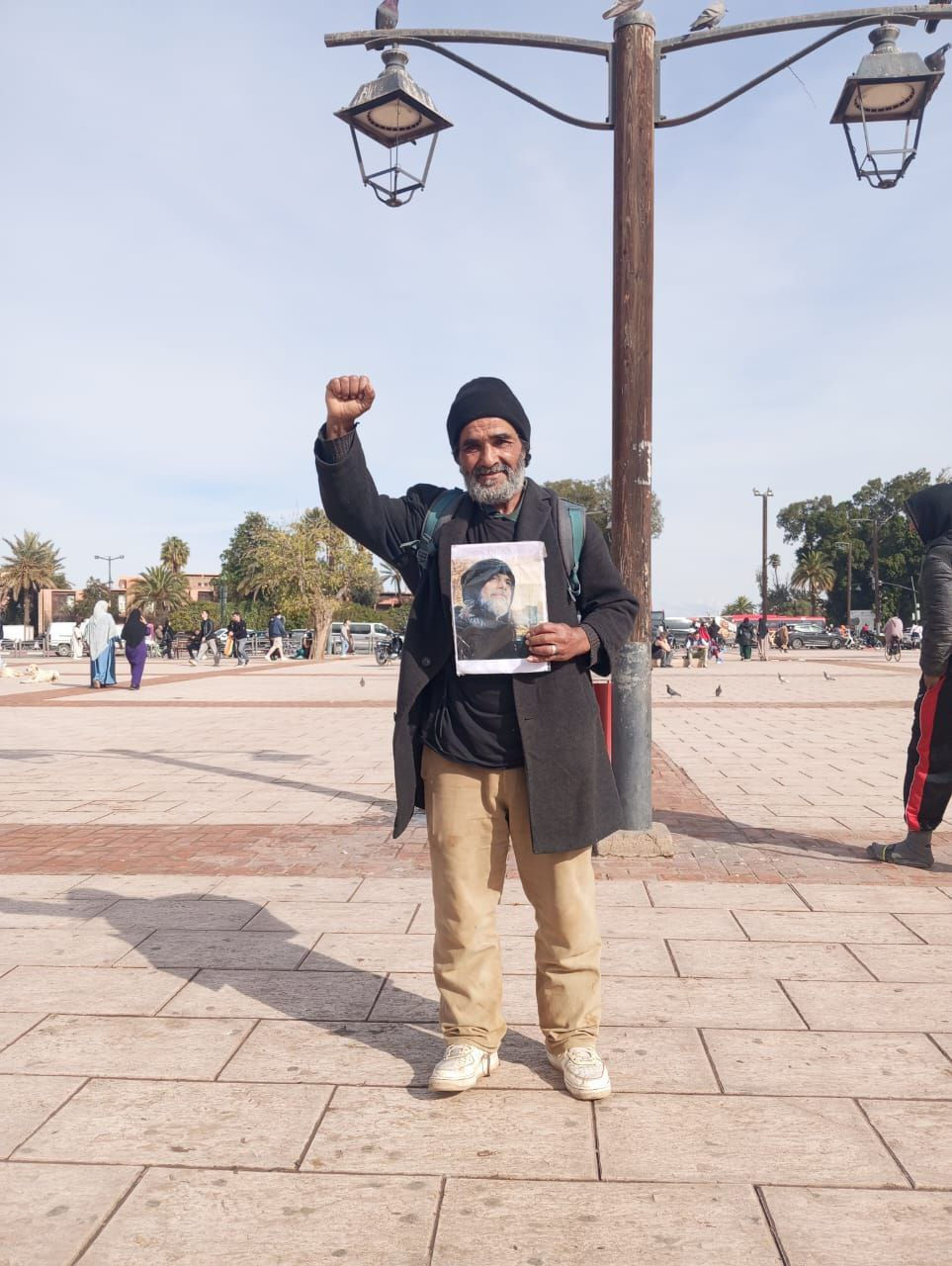
Imagine this: an elderly man publicly and peacefully shares his faith in Morocco — a country where freedom of speech should be protected under Article 18 of the Universal Declaration of Human Rights adopted by the United Nations. Yet Fateh Benaiss, a 57-year-old member of the Ahmadi Religion of Peace and Light, now lies in a psychiatric hospital, where he is forcibly confined after arrest by police simply for peacefully sharing his beliefs.
This religion has been targeted in many Muslim-majority countries, where its followers form a religious minority. Time and again, they have faced persecution, detention, arrest, and even imprisonment for publicly expressing their faith. In Morocco, authorities justify such treatment by claiming that sharing alternative beliefs “shakes the faith” of Muslims or attempts to convert them to another religion. What is presented as protection of religion often becomes a tool to target religious minorities and undermine the right to freedom of religion or belief.
Fateh Benaiss is a father of three and a Moroccan citizen living in Kalaat Sraghna. Ten years ago, he adopted the faith of the Ahmadi Religion of Peace and Light after previously practicing Sunni Islam. That decision transformed his life and gave him a new sense of purpose. From that moment on, Fateh began openly and publicly sharing his faith.
On social media, he frequently posted photographs of himself alongside pictures of Abdullah Hashem Aba Al-Sadiq, the leader of the Ahmadi Religion of Peace and Light, proudly raising the slogan: “Allegiance is to God.” His dedication was not limited to the online world. Fateh traveled across Morocco — to cities such as Casablanca, Marrakech, Khouribga, and others — determined to spread his message. Walking through the streets of these cities, passersby would often see him hanging posters or distributing flyers explaining his beliefs.
To him, these actions were expressions of faith. To the authorities, they were seen as a disturbance despite ratifying the Universal Declaration of Human Rights, in which the right to freedom of thought, conscience, and religion, including the freedom to change religion and practice beliefs publicly or privately, is guaranteed. Yet despite these obligations under both Islamic principles and international law, individuals who depart from traditional religious interpretations continue to face harassment and prosecution.
Fatehs’ first arrest took place in May 2023, when he and two other believers raised a banner reading “Allegiance is to God” in public in Casablanca. That arrest was only the beginning. Many more detentions followed, including another in April 2025. On that occasion, Fateh and a fellow believer were arrested after distributing flyers in Marrakech. They were held in police custody for approximately 48 hours before being transferred to a psychiatric institution — a pattern that had already been reported in earlier detentions.
The situation became even more alarming recently. At the end of March 2026, Fateh’s brother went to a police station in Kalaat Sraghna to ask whether Fateh was being held there. According to the family, a police officer responded dismissively: “Oh, you are asking about that crazy guy who makes videos in Marrakesh? He is not here — and don’t ask about him again.”
Some time later, the family received news that Fateh had been transferred to a psychiatric hospital in Kalaat Sraghna. When his wife attempted to visit him, she was denied access to her husband.
Fateh’s story highlights a harsh reality: even when laws guarantee freedom of speech and the right to practice one’s religion both privately and publicly, these rights are often systematically violated in practice.
In the past, there were cases in which believers of the Ahmadi Religion of Peace and Light were persecuted for peacefully practicing their faith openly. They were arrested and even imprisoned. However, shortly after the media reported these cases and the Khouribga branch of the Moroccan Association of Human Rights issued a statement declaring that the trials of these believers were baseless and constituted a violation of freedom of belief, the Moroccan authorities were forced to release the believers in response to that statement.
The persecution of followers of the Ahmadi Religion of Peace and Light is often linked to beliefs expressed in the book The Goal of the Wise, written by the faith’s leader, the Qaim of the Family of Mohammad, Abdullah Hashem Aba Al-Sadiq. These teachings are considered unorthodox and contrary to mainstream religious views. Among them are the announcement of the appearance of the Imam Mahdi and the recognition of Aba Al-Sadiq as the divinely appointed leader of the age — a claim that challenges established religious authority in some countries.
In Morocco, persecution is closely tied to the slogan “Allegiance is to God,” which reflects the belief that kingship belongs to God alone. In Morocco, however, where citizens are expected to demonstrate allegiance to the king, authorities treat this slogan as a direct challenge to the monarchy.
From a human rights perspective, this points to clear violations of freedom of religion and expression. Despite ongoing economic difficulties and social instability, the monarchy continues to suppress dissent, with individuals facing arrest or punishment for criticizing the king or state institutions. This reflects a pattern in which fundamental rights are violated to maintain political control and silence opposition.


"A Yale University professor of law and history, Samuel Moyn, has resurrected and redefined Marxian class conflict. In the old Marxism, the capitalists exploited the workers. In Moyn’s version, elderly Americans exploit the young. Moyn’s solution, espoused, of course, in the New York Times (April 21), is for the old to be dispossessed of their homes, jobs, accumulated wealth, and political and judicial offices. These dispossessions and more are needed for “intergenerational justice,” by which Moyn means redistribution from the aged to the young, and in order to stop older Americans from “Hoarding America’s Potential.” Moyn thinks that a poorly educated and undisciplined youth can manage all of America’s affairs better than better educated and more disciplined older Americans." -…