


The Crackdown—and Rise—of AROPL in Malaysia in 2025
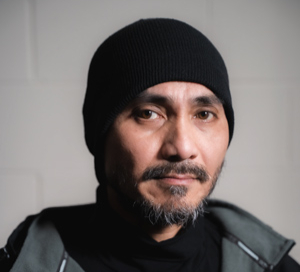

Malaysia presents itself to the international community as a nation that upholds freedom of religion, enshrined in its Federal Constitution. Yet beneath this constitutional promise lies a deeply entrenched system of religious control, coercion, and persecution—particularly against ethnic Malays born into Islam. For this group, freedom of belief exists only in theory, not in law or practice.
Under Malaysia’s legal framework, any individual born to Muslim parents is automatically registered as Muslim at birth. This designation is permanent and legally irreversible, regardless of personal conviction, conscience, or belief. The irony is stark: upon reaching the age of 18, Malaysian citizens are entrusted with the right to vote, to choose political leaders and ideologies they believe are best suited to govern the nation. Yet, Malaysian citizens who were registered as Muslims from birth, or who regret converting to Islam after they became adults are categorically denied the right to choose their own or other religion or belief system—even when they are convinced it is true.
This contradiction represents a clear violation of fundamental human rights, particularly the right to freedom of thought, conscience, and religion. The Malaysian state attempts to disguise this violation through legal technicalities and administrative sleight of hand, projecting an image of tolerance while systematically denying religious freedom to a significant segment of its population.
This article briefly examines the legal, social, and political mechanisms that restrict religious freedom in Malaysia, with a focus on the experiences of members of the Ahmadi Religion of Peace and Light (AROPL). Drawing on documented cases of state persecution, enforced disappearances, and legal coercion, this paper highlights the human rights violations that occur when religious orthodoxy is enforced through both state and non-state actors.
The Crime of Apostasy and the Illegality of Proselytizing

Even worse, under Malaysian law and a 1996 National Fatwa, Sunni Islam is the only permissible faith for ethnic Malays. Any other belief system, including other sects of Islam like Shia, is deemed heretical and is actively suppressed:
The case of Lina Joy, who fought for years and ultimately failed to have "Islam" removed from her ID card, proves this. Any attempt to leave Islam is treated as apostasy, a crime punishable by fines, imprisonment in "faith rehabilitation" camps, and even death in some states. The state actively hunts for apostates, as seen when a government minister called for a "hunt" for members of an atheist group.
Documented Pattern of State Violence and Enforced Disappearances

The consequences for those who challenge the state's religious orthodoxy are not just legal; they can be fatal. The Malaysian state has been directly implicated in the abduction and disappearance of religious activists who were perceived as a threat:
Enforced Disappearances by State Agents: A formal public inquiry by the Human Rights Commission of Malaysia (SUHAKAM) concluded that Christian Pastor Raymond Koh and Shia activist Amri Che Mat were victims of "enforced disappearances" and were abducted by the Special Branch of the Royal Malaysia Police. Both men were targeted for allegedly spreading their respective faiths to Muslims.

Pastor Joshua Hilmy, a Malay who converted to Christianity, and his wife Ruth Sitepu also disappeared under suspicious circumstances after being accused of proselytizing to Muslims.

Joshua Hilmy & Ruth Sitepu
The Threat from Non-State Actors

The state's condemnation also encourages violence from radical groups. The murder of Dr. Joe Fernandez, a Christian politician, by a militant group who accused him of proselytizing, shows that such accusations can be a death sentence.
Furthermore, Malaysia's known issues with extremist groups like ISIS create a hostile environment where any "apostate" is a potential target. The thousands of threats AROPL members receive online are not idle chatter; they exist in a country where such threats can and do become real.
After the Ahmadi Religion of Peace and Light (AROPL) and its members in Malaysia were condemned, threatened, hunted, arrested, and persecuted from 2023 to 2025, a continuous social media blackout was imposed on all official AROPL channels and on the private accounts of its members. As a result, the year 2025 continues to be marked by oppression and actions carried out by the Malaysian government and radical Islamic movements in Malaysia.
On the 16th of January 2025 AROPL members raised banners in six Malaysian states declaring Abdullah Hashem as the Mahdi. This was a significant act of public proselytizing.
Malaysian believers hang banners of Aba Al-Sadiq on January 16, 2025 Malaysian believers hang banners of Aba Al-Sadiq on January 16, 2025
The government's reaction was immediate and hostile. A State Executive Council Member in Malacca, Datuk Rahmad Mariman, issued a public statement promising that the state government and the police "will pursue the individuals or parties responsible." This was a clear, official threat of prosecution.

Just one week later, on 23 January 2025, this was amplified at a national political level. The powerful Parti Islam SeMalaysia (PAS), one of the country's largest political parties, published an official statement demanding the federal government "take stern actions against the teachings and the members of our faith in Malaysia."
Between February and November 2025, however, the situation in Malaysia escalated dramatically:
On 23 February 2025, a fellow believer, Siti Fatimah binti Sulaiman, was detained and interrogated by religious officials in Terengganu after her own daughter reported her. She was pressured to renounce her faith, warned against proselytizing, and placed under family surveillance. Disturbingly, all contact with her was lost two days after this incident, on 25 February 2025. Her current whereabouts are unknown, raising grave fears that she has become a victim of enforced disappearance.

These events demonstrate a clear and terrifying progression. The state is not only targeting individuals for interrogation but is now also legally dismantling our religion piece by piece, starting with our sacred texts. The disappearance of Siti Fatimah after her detention by religious authorities is a chilling echo of the cases of Pastor Koh and Amri Che Mat, confirming that the worst possible outcomes are a reality for all the Malaysia AROPL members.
The state then moved to legally criminalize our faith's core teachings:
On the 21st March 2025 the National Fatwa Committee officially endorsed the banning of our religious books. And on the 10th of April 2025 the Ministry of Home Affairs acted on this by issuing a nationwide legal ban on our key religious text, "The Goal of The Wise," making mere possession of our scripture a criminal offence.
On 4 June, religious authorities in the state of Pahang (JAIP) detained a married couple, Noor Zaza Atiera and Muhammad Firdaus, confiscating their phones and passports before forcibly separating them. Their current status is unknown. On the same day, another member, Mohd Tarmizi, was arrested in a raid on his home.
Muhammad Firdaus bin Yaacob Noor Zaza Atiera Binti Zahanuddin Mohd Fikhrillah bin Abdul Rahman 
Mohd Tarmizi bin Mond Ariffin

On 6 June, the operation escalated dramatically. A team of six armed officers from the police Special Branch taskforce violently broke down the hotel room door of Mohd Fikhrillah bin Abdul Rahman. He was beaten and subsequently charged with Sharia offences for his faith. This use of a high-level, armed police unit demonstrates that the state now views AROPL members as dangerous criminals requiring paramilitary-style raids.
On 27 July, the threat expanded to non-state actors. A member of AROPL (his identity has to be kept confidential for security reasons) was physically assaulted by members of PEKIDA, a radical Sunni group known to have members within the police and military. Fearing the authorities as much as his attackers, he was forced to file a police report without revealing the attackers' identity or the religious motive, proving there is no effective state protection for victims like him or any of AROPL members in Malaysia.

Subsequently, his wife was doxxed during a live TikTok broadcast—her national ID number, home address, and car details were posted publicly by her harassers. The family is now in hiding.
On 5 August, the fate of some of the arrested members became clear. News reports confirmed that Muhammad Firdaus Yaacob and Noor Zaza Atiera Zahanuddin were forced to plead guilty to possessing our religious materials. The report noted this was done to avoid imprisonment and prevent the state from taking custody of their daughter. Mohd Fikhrillah was also forced to plead guilty and was heavily fined. This proves the Sharia court system is not a venue for justice, but a tool of coercion used to force believers to confess under duress.

The final stage of persecution is now operating in secret. On 4 September, Muhammad Hisyam Fikri, another member, disappeared. Our investigations revealed he was detained by the Johor Islamic Religious Department, tried in secret, and sentenced to prison the very next day, all without legal representation or any media coverage. His family, likely under threat, denies knowledge of his whereabouts. This demonstrates the state is now using a secret justice system to make members of my faith disappear without a trace.
The Department of Islamic Development of Malaysia, under the Malaysian Prime Minister’s Office, held a convention on 5th November 2025. The first topic presented was titled “Research on the Ahmadi Religion of Peace and Light”, delivered by the Faculty of Islamic Studies. The presentation was of very low quality, full of errors, and its content was solely taken from attacks and false accusations found on social media. It was conducted by Dr. Yusri bin Mohamad Ramli from the Faculty of Islamic Studies, National University of Malaysia (Universiti Kebangsaan Malaysia-UKM).
Weekly Friday sermons in mosques across the country have also attacked AROPL and warned Muslims to stay away from AROPL. In fact, several mosques have even invited scholars to deliver lectures on the deviation and dangers of AROPL.
The Malaysian government’s treatment of AROPL illustrates the complex intersection of religion, law, and human rights in the country. Despite constitutional guarantees of religious freedom, AROPL members and ethnic Malays in Malaysia are denied the right to convert, proselytize, or freely practice non-Sunni faiths. State persecution, enforced disappearances, legal coercion, and propaganda combine to create a climate of fear and oppression. The documented cases of enforced disappearance, criminalization of sacred texts, and coerced confessions highlight systemic human rights violations that merit urgent international attention.
Malaysia’s legal and social framework, by prioritizing religious orthodoxy over individual freedoms, presents a critical challenge for human rights advocacy and the protection of religious minorities.
The Rise On The Night Of Power
On the 23rd, at the height of midday, when the sun blazed down upon the streets, 23 brave souls embarked on a journey that would forever change the landscape of their fight for truth. It was 12 PM, and they were in the heart of Gombak, beginning their bold mission, one that would take them all the way to Ampang. But this was no ordinary journey. These 23 individuals were not simply traveling—they were brothers and sisters in faith, a soul family united by a higher calling, a bond deeper than blood, forged in the shared love and belief in the supremacy of Allah.
In a country where the expression of their faith had been restricted, where fear of persecution loomed over every believer, these men and women chose courage over silence. They took to the streets—not at night, where shadows could provide cover, but in broad daylight, fully aware of the risks they were taking. They knew that in Malaysia, even the most basic expressions of faith could be met with severe consequences. Yet, they were unyielding. They raised the banner of the supremacy of God in the middle of the bustling city, knowing full well that their actions would be viewed as defiance, as a challenge to the very system that sought to suppress their belief.
It wasn’t just a flag they raised—it was a declaration. A declaration that no matter how many laws were passed to silence them, no matter how many times they were told to conceal their truth, they would not back down. This was an act of faith, a direct challenge to the oppressive forces that sought to erase the truth. And as they drove their convoy through the streets from Gombak to Ampang, they carried with them the powerful message of the Quran:
"They want to extinguish the light of Allah with their mouths, but Allah will complete His light, although the disbelievers hate it." — At-Tawbah 9:32
This verse echoed in their hearts as they traveled, for they understood its meaning in the most profound way. The authorities, the government, the enemies of truth, could try all they wanted to extinguish the light of Allah—whether through persecution, fear, or oppression—but they could never succeed. The light of Allah was eternal, unstoppable, and would shine through the darkest of times. No matter how much the world tried to suppress it, His truth would always prevail.
They knew the dangers they faced. They knew that they were risking their lives, that the very act of stepping onto the streets could bring wrath from the authorities. But their conviction was stronger than fear. They believed with every fiber of their being that even in the face of persecution, the truth of God’s light would burn brighter than any force that tried to quench it. They understood that their faith wasn’t something the government could ban or destroy—it was a flame in their hearts that could never be extinguished.
As they continued their journey from Gombak to Ampang, the convoy wasn’t just a physical movement—it was a movement of souls, a living testimony to the strength of their belief. The banner they carried wasn’t just a symbol—it was a defiance, a beacon that refused to be dimmed, a message of unwavering truth that nothing in this world could silence. Their action was not just an act of resistance; it was an act of faith, a reminder that no matter the consequences, no matter the danger, they would always stand firm in the light of Allah.
And as their convoy pressed on, the ripple effect of their courage began to spread. The 23 who had taken the first steps would not be alone for long. Word of their bravery would travel, igniting the hearts of others. The number of AROPL members in Malaysia would continue to grow, day by day, as more souls joined in their cause. What began with a small group of 23 brave men and women would soon become a movement—a force of truth, unity, and unshakable belief.
The actual number of AROPL members in Malaysia is far greater than just the 23 individuals who had the opportunity to take part in this historic convoy, and the true figure would certainly surprise many parties—especially the Malaysian government. This number continues to grow and expand every day.
The government could try to stifle their voices, to silence their message, but they had underestimated the power of faith. For the truth of Allah was not something that could be contained by earthly laws or human limitations. The flame of God’s light would never be extinguished. It could never be silenced. And in the hearts of these 23 individuals, that flame burned brighter than ever.


Sunni islamın baskın olduğu diğer ülkeler gibi. Türkiye de aynı şekilde. Bu tarz ülkelerde İNANÇ özgürlüğü yok maalesef. Farklı inançtan insanlara çeşitli zulümler yapılıyor. Hem toplum hem de devlet.